YesiYesi, Falling Cedi and Laughter: Ghanaians and their Political Humor

Screenshot 2014-02-18 10.29.06Probably I should not put this in a blogpost, but rather write an abstract together for an academic paper with my inspiring colleague who writes about Ghanaian politics in just this way.

Anyways, I am thrilled that YesiYesi now provides almost daily, online satire with “the onion”-like twists of Ghanaian daily news. It is the first time someone (who?) has put together online versions of the very typical Ghanaian, political humour online in such a consistent manner. In a blog! (Please join BloggingGhana!) In the last few days we have read about …Justin Bieber moving to Ghana, Ghanaian women refusing Valentine’s gifts if the Cedi can stabilise, Ghanaians soon being able to go to UK without a Visa, and my favorite, KNUST charging  toll for walking on the pavement, the rate based on your foot wear…chale wote was cheapest…haha, I have to laugh just by thinking about it!

Finally, Ghana has its own news satire, and, YesiYesi, it is on point!


Continue Reading

You may also like

University of Ghana Road Toll

 The road toll has been in effect for two weeks and as a graduate student, I am of course not happy that in addition to fees that almost double from year to year, I now have to pay just to get on campus!

However, after the first weeks of confusion and queues that stretched long (my first day to enter, I waited for 25 minutes just to pay my 1 GHC (0,30 USD), some efficiency measures have been taken, including many more attendants in reflective vests to collect fees from motorists, a new entry point into the campus, and this morning the queue was negligible.

There has been much debate whether or not the university has the right to charge Ghanaians to drive on a public road without asking the parliament for permission (they grant all taxes and fees), but as I do not speak lawyerish, I am not sure what to think. They way I see the toll is that it is a very serious statement from the university telling Ghanaians:

“we are on our own now. The government does not support us and we must do cost recovery to survive!”.

Increased tuition fees is one measure, a road toll another.

Sadly, that message seems to have been lost between reflective vests, 1 GHC tickets and first page squabbles.

Continue Reading

You may also like

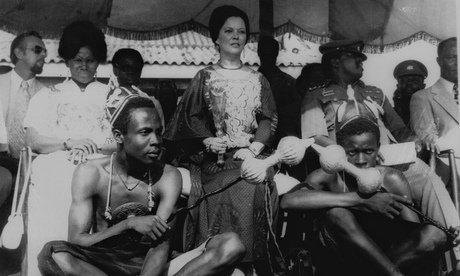
Shirley Temple: Actress and Ambassador in Ghana

Shirley Temple Black Americans have for long understood the potential of a face known from film. Not just President Ronald Regan or Governor Arnold Schwartsenegger  made the transition from white screen to colorful politics, actress Shirley Temple did too.

In 1974 she landed in Ghana as the American ambassador. The country was 18 years out of colonialism, but head-deep into dependency, especially due to the American oil crisis at the time. Temple stayed in Ghana for two years.

When I first heard about this interesting career change and Temple’s time in Ghana, I marveled. I became almost obsessed with finding photos of Temple in Ghana and my eyes widened as I saw her coiffed hair bobbing around in the Ghanaian sun surrounded by traditional leaders and welcoming parades.

 It would be interesting to know more about what her everyday life in Ghana was like, maybe now that she is gone, some writings might appear? Some interviews will be done? but never the less, her life reminds us that no matter where you start in life, you might end up in Ghana, smiling in the sun.

Photo borrowed from The Guardian from a worthwhile biography.

Continue Reading

You may also like

What is Ghana’s Tourism Policy?

Is it “Akwaaba, it’s an expression you will hear several times daily…it means ‘Welcome!’ and you will be” or is it “Visa requirements are subject to change…” ? Both quotes are from Ghana’s official tourism page, touringghana.com. The whole discussion started with a German acquaintance writing me an email to say she was coming to Ghana as a tourist. She was looking forward to the weather, the beaches and the cultural sites. Could we catch up for a drink? A while later she emailed again, now for “an invitation letter”.
I was shocked, why would a tourist to a country that calls itself “the gateway to Africa” need an invitation letter? Then, what is a tourist? and what does Ghana want with tourism? Why are we spending good money on advertising Ghana on CNN for instance, if we later make it so cumbersome to just get a Visa to enter?

I took my questions to Twitter and the rest is history. The highlights included the Minister of Foreign Affairs, Hon. Hanna Tetteh, getting heavily involved in the debate!

BTW @HannaTetteh I just wrote an “invite” for a German acquaintance who wants to come to Ghana as a tourist. Why does she need an invite?
@kajsaha @HannaTetteh the system is inefficient and makes Ghana look bad. I wanted to spend cedis there! Ghana made it hard.
@MissEDCofie @BlueBirdTail @kajsaha @RoisKiDGh@I_am_Kophy @Gondu because of some few dollars, you gonna turn people away? No big picture?
The first part of the debate was the “reciprocity/retailation” argument, that frankly surprises me and makes me think of Binyavanga Wainaina’s recent discussion about Africa’s middle class wanting to become Europe. Why are we comparing Visa schemes with Europe and not with other African countries such as Kenya or the Gambia.
@sondy @kajsaha when Ghanaians have to apply for visa’s to enter your countries to spend their own money does it make your country look bad?


@kajsaha @visafreeghana don’t tourists from #Ghana have to have invitation letters going the other way? #justasking
@kajsaha do you have any idea what Ghanaian citizens have to go through to get visa’s to travel to any country outside of Africa?
@kajsaha @kobbrown @Gondu @visafreeghana the day European,American n Canadian visa are free then we will do same.till then 2 only W africans
@sondy @kajsaha giving Ghanaians an opportunity to enter your countries without paying visa fees, showing bank statements etc would be great
@kajsaha as you retweet my responses kindly retweet the one on bilateral agreements. Reciprocity is an indication of mutual respect.
@kajsaha I’m sure you know that issues of visa’s are not just a matter of tourism policy. For now your friend requires an invitation letter
@sondy we can have visa free travel when there are bilateral agreements between our countries giving Ghanaians the same treatment you want
@osarpong @OsabuANNY @kinnareads @HannaTetteh @kajsaha I’m all up for reciprocity! I don’t have elected representatives but I’ll write!
Secondly,  there was the issue of tourism management in general, how it was lacking… (but can we not start with cleaning up Visas?)
@kajsaha @RoisKiDGh valid points there is a lot to do but abolishing visa wont solve much
@kajsaha Kenya requires visas of Westerners. It does have a better tourism infrastructure which is essential. @HannaTetteh
@HannaTetteh @kajsaha I question the “losing to Kenya” statement. We don’t have 30% of the tourism infrastructure Kenya has.
@kajsaha exactly my point. Even with free entry, mismanagement will drive all tourists away. @MissEDCofie
Ghana is not worth coming to, so we should make it hard to enter? Sorry @RoisKiDGh but that does not make sense. @kobbrown@angelgooner
 
Then there were some personal issues…
@kajsaha have you read anything on Ghana & Tourism Development/ Tourism Policy or is your comment only based on the issue of visa’s?
It is based on public info from Min of Tourisms website, the budget and the email I got to invite a tourist. Still learning! @HannaTetteh
@kajsaha @kobbrown @visafreeghana You know some of the Chinese who were in illegal mining were on tourist visas?
In the end, we kind of all agreed. 
@kajsaha @visafreeghana However, I agree that the system is outdated and needs to be reviewed.
@kajsaha What a country can do is make visa processes more friendly, less cumbersome. @HannaTetteh
@kinnareads @kajsaha @HannaTetteh visas may not be a right, but why make the processes harder than it needs to be, and lose passports?
I guess the debate continues.  

I found out that that rules are different depending on what countries the tourist comes from. For instance Ghana’s embassy in Germany demands one letter of invitation, in Canada it is two. Form my recent experience, Scandinavian tourists do not need an invite, only an address and contact in Ghana (which might also stop some tourists).

Lisa from Canada shared her story on the Scrap Tourism Visas for Ghana FB page:

“My parents had big problems. Again needed 2 letters of invitation. The consulate in Toronto (CAN) wanted addresses with complete street address and house #, not simply PO box. As we were simultaneously trying to get visas for my parents + my boyfriend from 2 consulates, it was bad. Toronto rejected the letters & demanded new ones while the consulate in Ottawa accepted them. Why the difference? & how many people in Accra have a full street address? Its not the same as in Canada.

Throughout my extensive travels a common theme. Foreigners mainly come to visit family members/friends working in Gh, infrequently as visitors. Partly because the visas. The expense plus needing the letter of invitation. I understand the government can’t “lose” people within their borders but there must be a better system. The visas r too expensive. We spend a lot of $ in the country anyways.”

Here is also an article by a campaigner to “scrap” tourism visas for Ghana, although I personally think “scrapping Visas” is going too far, I found the examples highlighting other African experiences interesting.

Continue Reading

You may also like

We have a parrot!

Yesterday, I was told a parrot had been seen in a tree in our backyard. The announcement came at a time I felt tired and flustered, but now my whole body shaped up – a parrot?

After sneaking around for a while we saw it (and possibly its partner) in all its green and orange glory. It moved on the branches with the help of its beak, sang in a chirpy way, hid in the greenery and finally – like in a flash-  sailed away in a quick orange streak.

My daughter was also excited and called it “a carrot” as she is in the process of learning vegetables and fruits in school.

I went inside and googled that parrot’s ass. Green+parrot+West Africa and there it was.

The Senegalese parrot, or Poicephalus Senagalus Versteri in our backyard. Isn’t it beautiful?

Screenshot 2014-01-29 14.28.09

Photo from parrot.org

Continue Reading

You may also like

BloggingGhana in 2014: #MoreStories

This year, my organisation BloggingGhana is taking a giant leap forward by getting our own physical space: Ghana’s first social media hub. But we need help to create opportunities for #morestories to be told. Over the next month and a few more days, we are trying to crowd-source USD 10 000 for our new office. You can be a part of our success!

See our video (featuring my colleague Edward and myself!)

Donate on Indiegogo!


Continue Reading

You may also like

I Did Not Know Komla

BBC anchor and celebrated Ghanaian journalist Komla Dumor passed away on Saturday only 41 years old. A terrible tragedy, but what I would like to focus my blogpost on is the reaction of Ghanaians, that I find overwhelming. 

I have followed the reporting – around the clock memories on radio, plenty admiration blogposts, a Facebook page for celebrating his life (currently with 16 400 likes), statements from big people like Kofi Annan and Chimamanda Ngozi Adichie and endearing BBC collages (I even shed a tear too). However, the magnitude of media space provided in Ghana reminded me only of when Ghana’s sitting president passed away in July 2012, and actually a radio host remarked that “last time we did this kind of all day broadcast was for President Mills”. I even heard rumours of a state funeral being prepared!

I would just like to stop for a minute here and ask, when Ghanaians are celebrating Komla Dumor’s life, what exactly is celebrated?

  • Excellent, investigative journalism?
  • Fame?
  • Alpha male-ness?
  • A good rep of Ghana?
  • A desirable lifestyle far away from the regular Ghanaians?
  • All of the above?

Yes, he was known to many Ghanaians as a radio journalist from the end of the 1990s. Yes, he was journalist of the year in the mid 2000s. Yes, he was well-known, handsome, tall and wore great suits. Yes, he represented Ghana well (but so do BBC journalists Akwesi Sarpong and David Amanor and other media folks around the globe). I feel that maybe it is his lifestyle (that now some people speculate killed him) with travelling the world, being where the action is, standing in front of the camera smiling…that secretly is the dream of the modern human being.

My Ghanaian friends write on social media: “I did not know Komla, but…” and paradoxically use his first name like he was an old friend. It is clear that Ghanaians are in shock at this man’s death. I find it sad, but I did not know him or his work. I do not have a TV with BBC on it (like most in Ghana) so did not watch his programs. I was not around when he was the first host of the SuperMorningShow. Well, maybe at times I have to accept that I still am a foreigner to Ghana and might never really understand where I have landed…

Continue Reading

You may also like

Mandela in Memoriam or How Should We Remember Him?

In 2005, I went to South Africa for a three week visit. It was amazing. I remember beautiful vistas of mountains and penguins, Freshly ground’s hit, pinstriped crowds on busy Jo’Burg streets, sweaty DJ sets at “Mama Africa Club” in Cape Town, ANC songs sung in a minivan somewhere on the Eastern Cape, touring the Apartheid museum with chills down my spine and braii moments with plenty of meat and laughter.

I also remember getting a text message from the first of my close friends to have a baby. “Boy has arrived! Mother and child are both healthy!” In my joy, I was looking for something to buy and soon found the perfect gift. A onesie with pink stripes and a stylized photo of Mandela. It was gift wrapped and delivered to the newborn child.

In the weeks since Nelson “Madiba” Mandela’s passing the discussion on how to remember Mandela. As a young lawyer? A son of a traditional leader? A terrorist? A prisoner? A father and husband? A world leader? A pacifist? A nice guy? The best guy ever?

mandela onesie

That I think of “Madiba” as a icon on a kid’s outfit, I find both horrible and hopeful. Horrible as it reduces a revolutionary to a commercial item, but also hopeful as his leadership – immortalised by a calm smile on an ageing face – in a small way will be remembered by the next generation across the globe. 

Photo borrowed from The Tuesday Photo.

Continue Reading

You may also like

Give Blood, Save a Life!

“I feel especially passionate about the need for each and every one of us to give blood. Mothers who suffer complications from delivery often need blood. It is not good enough to say that I will give blood when a relative or friend needs it. We should all give blood regularly to save a life.”

Earlier this year, I gave blood for the first time. It was very easy and much quicker than I had anticipated. Now Ghana’s blood banks are again running dry – and that at the season when most is needed. So please, if you are healthy, do what you can.

Sat 30th Nov or Fri 6 Dec is your chance to give blood, more details here.

The intense bit. That wasn't even very intense.
The intense bit. That wasn’t even very intense.
Continue Reading

You may also like

Sweden’s Colonial Past

In a very interesting piece for Africa Is A Country Blog (the one “that’s not about famine, Bono, or Barack Obama”), Swedish journalist Johan Palme points out that there seems to be a strong recent interest in the Colonial past of Sweden. Because despite what our history classes told us, of course there was.

He talks to historian David Nilsson who says:

“It is true that Swedish interests in Africa were only marginal at the time, and Sweden remained a minor player. But qualitatively I see no distinct line between Sweden and other countries,” he says. “Sweden went to Berlin as a peer among nations, accepted and condoned the proceedings. It was a political justification of a social process that had already begun as Swedish officers and missionaries were already taking part in the colonization of Africa.”

I remember my first visit  to the Ghanaian tourism site, the Cape Coast castle, where slaves were kept in waiting for transport overseas and being horrified when told that Swedes first established a trade point here. “First the Swedes, then the Danes, Portuguese and Brits…”, the guide went on with a monotone voice. I was confused, but my mouth was already talking:

– But the Swedes were never involved in slave trade, right?

The guide glanced over at me and did not have to respond. I got it. The feeling was chilling.

Palme debates why this colonial discussion is now appearing on several fronts  and concludes interestingly that the apparent newfound guilt is maybe merely a fashion and nothing deeper like wanting to understand our history fully:

“Rather than radically re-engineering its [Sweden’s] relationships internationally, perhaps it [looking into the colonial past] is a mere cosmetic paint to appear good again, good by today’s standards.”

A good, and chilling, read!

Continue Reading

You may also like

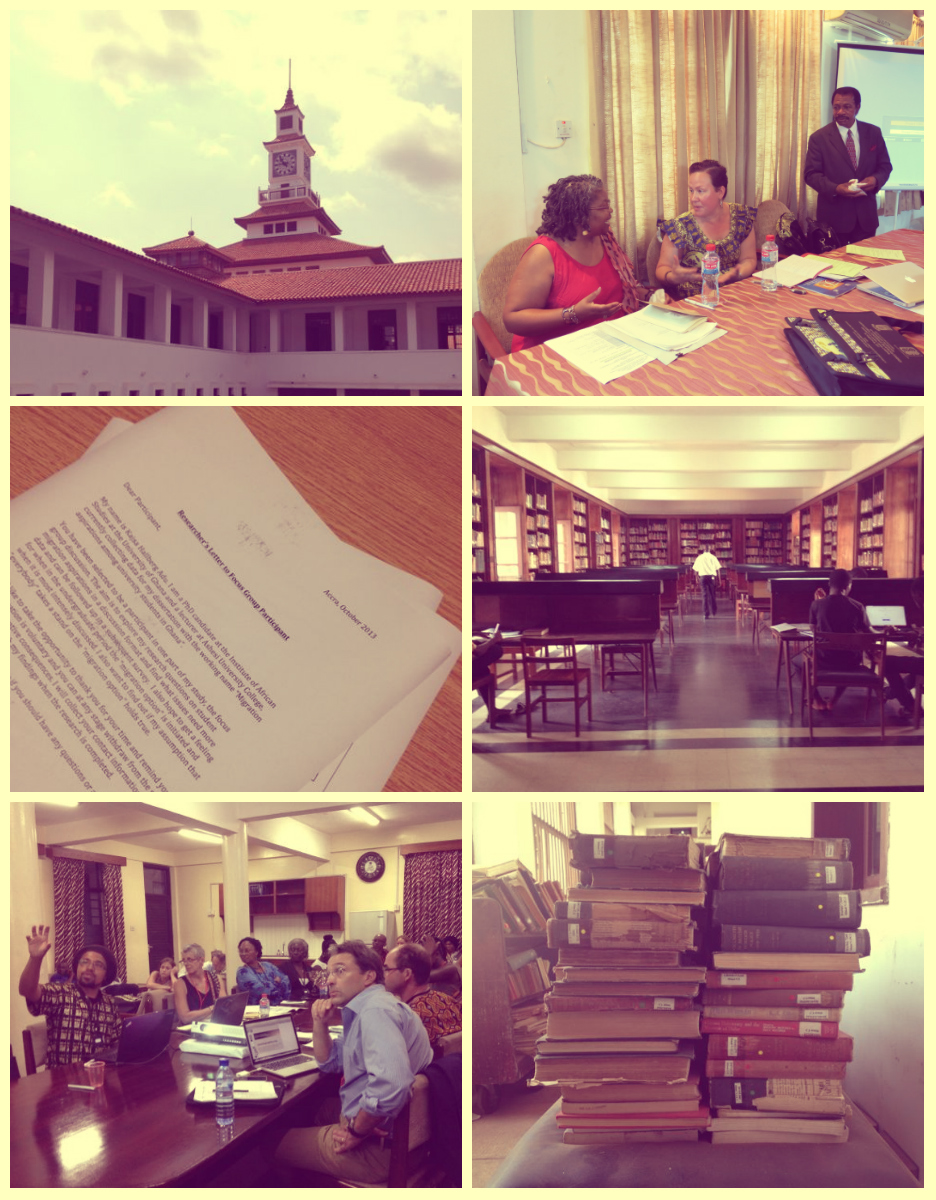
Research Update – Winning Choices or Hacks for PhD Productivity

Research collage

As readers of this blog knows well, I am a PhD candidate with the Institute of African Studies, University of Ghana currently doing my data collection for my dissertation. My research moves very slowly, but this semester, I can see I have gotten over the “what is it really that I am doing?”-stage and entered “this is what I am doing!”-stage of my research degree. The feeling is swell. Some of the winning choices I have made this year includes:

  1. taken help from research assistants Ibrahim and Esther (and maybe Seth). They need to learn about the research process, I need admin help. They could use some extra cash, I could use some more hours in my week. Win-win.
  2. spent many more hours in the UG Balme Library as graduate students now have a lovely Research Commons there. The space is just so beautiful, I am collecting for a photo post on the sublime building that is Balme library.
  3. transferred my research library onto Zotero (finally! it took me three full days and it is not 100% yet, but just going through my readings was useful!)
  4. thinking about my research every day. In the car, the first 30 minutes in my office in the morning or after dinner. Solutions only come after much thinking.
  5. grabbed every opportunity to publish or present. I decided to do this as the main purpose of doing a PhD is to learn the craft of research, however when feeling slightly overwhelmed with just your regular work – extra stuff seems…crazy! But it is not, in new constellations, be it with conference participants, abstract reviewers or a taxi driver, I have learned more about the craft.

What good choices have you made in your career this year?


Continue Reading

You may also like