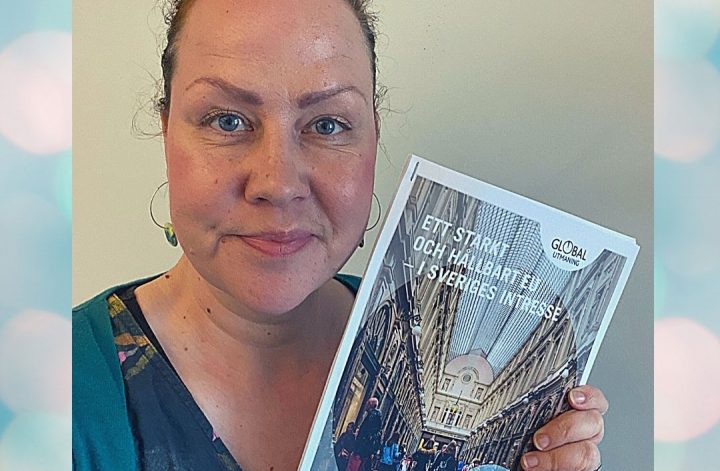
Today when I was reading local newspaper SydSvenskan, I came across this piece of information (not yet on the web) apropos a home for elderly that have dogs and soon will have five chicken to liven up its inhabitants.
I feel this news somehow illustrates one of the differences between life in Ghana and in Sweden (homes for the elderly of course is a difference in itself).
According to Vellinge’s environmental officer Lars Robert Göransson, roosters are forbidden within residential areas (detaljplanerat område in Swedish) because of the risk of their cocoos disturbing.
However, so far there are no close neighbors to the hencoop (at the home for elderly).
– “I do not want to promise anything”, says Göransson. “But if the elderly would appreciate a cocooing rooster as well, then we will have to look into the possibilities of issuing a temporary permit.”
(my translation)
On the one hand, I love that there is legislation on this type of nuisance, but on the other I also feel strange about the whole idea of paperwork being carried out because of a rooster.
Which world would you like to live in? The world where life is planned in detail or where there is room for a rooster?
Since I wrote about homosexuality for my class blog Social Theory Blog last year, the Ghanaian blogosphere has been quiet on the topic ( I believe except for a weeklong theme at AntiRhythm some time ago). Homosexual acts are forbidden by law in Ghana and there has been very little public debate that would suggest Ghanaians in general would like to change the status quo.
Much as I don’t understand why people become gay, I also don’t understand all the hatred being spewed on people in this country who have chosen to be gay.
I believe that it is wholly un-Christian for any believer to jump on a moral high horse and proclaim homosexuals as the scum of the earth who deserve to be exterminated and condemned to eternal damnation. Using scripture to fuel hatred and discrimination is the most despicable thing to do. I have no doubt in my mind that there will be some homosexuals in heaven but there will be a lot more heterosexuals burning with me in hell.
Ironically the loudest voices on homosexuality come from those opposed to it. They claim “gayists” are lobbying for special rights yet where are the voices of homosexuals in Ghana? They want us to believe they are secretly calling for special rights and converting more people to their “cause” resulting in the breakdown of society.
…
Ghana’s future depends on rational thinking and the challenging of mob mentality.
Holli, a Canadian woman living in Ghana since many years, has some time ago written a summary of the situation with many interesting links here. She also provides the legal background:
Under Ghanaian law, male homosexual activity is officially illegal. Criminal Code 1960 – Chapter 6, Sexual Offences Article 105 mentions unnatural carnal knowledge – and homosexuality is included in this description.
Coming from a liberal standpoint, I feel odd about living in a country where homosexuality between consenting adults is illegal (although female homosexuality seems to be allowed?) and hope that the above blogposts are just a start of a wider debate. I believe the Ghanaian blogosphere can begin to discuss this Ghanaian taboo, but also examine the arguments against homosexuality – and the advantages of legalization – and maybe even challenge the status quo.
Today is sixth of June, Sweden’s national day. National day? you say and think of parades, flags and fireworks flying about and families getting together to mark the occasion with foods and festivities.
However, it might be the most low-key celebration of any nation. Ever. Only a few years ago, the sixth became a holiday in Sweden and we Swedes are frankly still not sure what to do with it. We do not have a history of parading, as we are not a military nation and have been lucky (or aloof) enough to avoid wars for more than 200 years. Waiving a Swedish flag in Sweden is not encouraged. We feel it is somehow boastful and much too nationalistic. Fireworks would not work against the light summer skies – remember the midnight sun?
Some Swedes say that our midsummer celebrations at the end of this month is when our Swedishness really shines though: families meet, traditional food and drink are prepared and strange nationalistic behavior like building a flower pole, dancing and singing is proclaimed – so maybe that would be a better national day?
I had such a lovely time in Marseille, in the south of France!
Top left at a visit in a vineyard in Cassis, a small town outside Marseille, a sign at the vineyard which translates to “a meal without wines is like a day without sunshine“…then the lovely local fish soup Bouillabaisse (not too different from a good light soup with fresh fish, I must say…read all about it in the Bouillabaisse charter here) and last but not least with friend since 10 years, Cris, who lives in Marseille and hosted me.
I felt like this trip connected me to the wide world of teaching (Australia, Taiwan, Uganda, US), opened my eyes to new academic opportunities and at the same time reminded me of how small the world is…
…like this was not enough, French food was of course great, living in a nice hotel was amazing and getting to also see an old friend was a big plus…
So I was planning this great exposé about that Ghana now has a female running for the flagbearer of the ruling political party – aka this is as close as Ghana has been to a female president. On this issue, I have interviewed people, I have thought about it from several angles, but I somehow cannot get a good post out of it!
At the same time, I have now temporarily relocated to Sweden, which meant some serious packing, saying farewell to friends and family and stressing in Ghana! In Sweden, it has meant some serious adjusting, saying many hellos to friends and family and trying to wind down…
Next week, I will go to the city of Marseille in France for this symposium on ethics. Lets see if I can do some blogging from there…If I can’t, it means another week of no posts here while I am sipping a café crème in the warm winds from the Mediterranean sea attending a symposium!
Yesterday was mother’s day in Ghana and in many other countries (however not in Sweden!). Celebrations here in Ghana are maybe a little more pronounced than in Sweden, but apart for some Mother’s day parties and marches, pretty much the same. This year as every year.
Except for one, important thing. This year, I was included!
“Happy Mother’s Day in Advance!”
I got to hear several times during the day that was spent with mother-in-law, relatives and friends. So, yes, now it is official here on my blog too: I am expecting a baby! I am going to be a mother!
In 1912, Anna Jarvis trademarked the phrases “second Sunday in May” and “Mother’s Day”, and created the Mother’s Day International Association.
“She was specific about the location of the apostrophe; it was to be a singular possessive, for each family to honour their mother, not a plural possessive commemorating all mothers in the world.”
By the way 2. I added the categories “Pregnancy” and “Parenting” under “Personal”. More posts on these topics are likely to follow…
Anas was the one to expose the ill-conditions for children at the Osu Childrens’ Home, the bribes at Ghana Customs and some other high profile scandals. The article with the suggestive heading “Smuggler, Forger, Writer, Spy” outlines Anas sometimes risky methods and his background – he is a lawyer, so draws on his knowledge to produce evidence that will hold in court! It also discusses the problematic aspect of Anas now running a for-profit investigative bureau, Tiger Eye.
Nicholas Schmidle writes in The Atlantic:
The demand for Anas’s services soon outstripped his capacity at the newspaper. Some of the requests he received for investigations didn’t quite qualify as journalism. So last year Anas created a private investigative agency called Tiger Eye. He rents an unmarked space across town on the top floor of a four-story building where a handful of his newspaper’s best reporters work alongside several Tiger Eye employees. It’s difficult to know where one operation ends and the other begins. But they’re all part of Anas’s investigative fiefdom. The work space is divided into two sections: a war room of sorts, with a bank of computers against one wall and a wide table in the middle where the team hammers out strategy; and Anas’s office, decorated with framed awards, oversize checks (including one for $11,700 for Journalist of the Year), and snapshots of himself in disguise. Anas appeared uneasy when I asked him about Tiger Eye, partly because he realizes that its commercial aspect puts him in ethically dangerous territory. Yet it also constitutes a major source of the budget he relies on for long-term newspaper assignments. During the two weeks I spent with him in January, Anas fielded calls from the BBC and 60 Minutes, as well as private security companies, asking if he could conduct investigations for them. All offered generous compensation.
An issue that is not explicitly discussed, but can be read between the lines, is how lonely Anas is at his post.
Do we really just have one investigative journalist in Ghana?
If you have time off this Monday, I recommend you read Schmidle’s well-written article in full!
– If you compare Ghana and Uppsala, you should think outside the box here, while in Ghana is more about memorizing things. I’m very happy with my studies now, but did not think I had enough knowledge about the political background to be able to take me to the teaching of beginning. I would have liked to have had an introductory course in political background before the first course started.
On Uppsala:
– Uppsala was my first choice, I had it recommended by a friend from Ghana who reads this. It is a well-known university abroad. I think it’s very good to invite prominent speakers from outside and that you have access to literature and new publications.
On the much debated issue of fees for foreign students (yes, higher education has until now been FREE OF CHARGE), from next semester a reality:
– I come from a developing country and had been poorly paid when I worked in Ghana, simply put not the life-situation that is required. But I must say that my experience from Ghana enriches discussions on the course – this can be missed when introducing tuition fees and not having an extensive system of grants for students from developing countries.
After water and traffic, will mental health be Ghana’s next big challenge?
According to photographer and fellow blogger Nyani Quarmyne, 2,4 million Ghanaians are estimated to sometime in their life be in need of psychiatric help. With not more than a handful psychiatrists and around 2000 hospital beds, it is clear that most Ghanaians in need will be left without any help.
On Tuesday, I went to see Nyani’s beautiful, hopeful but also deeply disturbing photos, depicting the mental health crisis in Ghana. There were women who had been locked up by their men, men who were starring blankly in front of them, elderly with their mentally ill grown children with no help, but also the man at a health facility that was rearing chicken and the man who had secured a job with Zoomlion after years of mental illness.
The pictures that got to me the most was probably the ones with men fastened to tree trunks (like the one above), one outdoors, seated on a stone, one naked in a dark clay house. Imagine, having your family put your foot through a big chunk of wood and then closing the whole with an ironrod so that you could not escape…keeping you in a dark room…there you are, like an animal…so hopeless somehow…
Then there was the picture of the records keeper at a psychiatric hospital in Accra. In a blue nurse’s dress, between thousands and thousands of files, she has her desk. The filing system looks ancient and clearly is overflowing the space. Yet, she comes to work every day. I was thinking about human defiance…
Fellow blogger AntiRhythm was also there and voiced his critique this way:
“Families cannot afford about 25 Cedis (about 13 Dollars) a month to pay for the drugs that would create the right chemical balance which would make us call these unfortunates normal.
So they are shackled and manacled to prevent aggression or injury to themselves or embarrassment to their families.
When I saw it, I asked blogger Fiona: What country is this? I knew the answer; I feared the answer; I feared facing up to more evidence about the different layers of existence in this country.”
The NGO that partly sponsored this photoproject, BasicNeeds Ghana, has extensive programs that target thousands of people with mental illness or epilepsy, predominantely in Northern Ghana, but also in Greater Accra. They also have a knowledge project with several worthwhile publications available online, and now also a glossy book with Nyani’s photos – “Ghana, a Picture of Mental Health”.
I wish Ghanaians would have a glance through, we need to know what is happening to the weakest in society right now…
Now, to all of you that might sound regular, even mundane. Why are you telling us this? Meeting a blogger from your own blogging group, c’mon! Well, just hear me out! We have never met before! Jemila has been living in the states and following our meetings and emails from afar, but just moved back to Ghana.
I liked how the whole meeting happened. I was walking back to work after lunch and a student of mine comes towards me with a woman I have not met before. I say hi to my student (turned out she is Jemila’s sister!) and Jemila says:
– Hi, I’m Jemila!
And it was suddenly so obvious.
I wonder if Internet critics (“our kids only sit in front of screens these days”) would change their mind if a stranger on the street turned into a friend, just because of blogging?
 Last week, I posted on homosexuality in Ghana and the burgeoning online debate on the topic. This week the debate on homosexuality in Ghana has been summarized by Global Voices, which is good news for extending the discussion to other parts of the world.