>Are You a Ghanaian Blogger?

> Then tomorrow, you can join us for this month’s ghanablogging meet-up.

We are now about 30+ bloggers and about 8 or so usually show up for the monthly meetings to discuss blogging technology, writing tips, great posts and how to inspire more Ghanaians to blog. Last time we did our meeting on skype as an experiment! Read some highlights on ghanablogging here. It’s an informal and fun gathering through which I have made many friends.

So if you want to attend, just write me an email and I’ll send over the details! kajsahallberg a t gmail.com

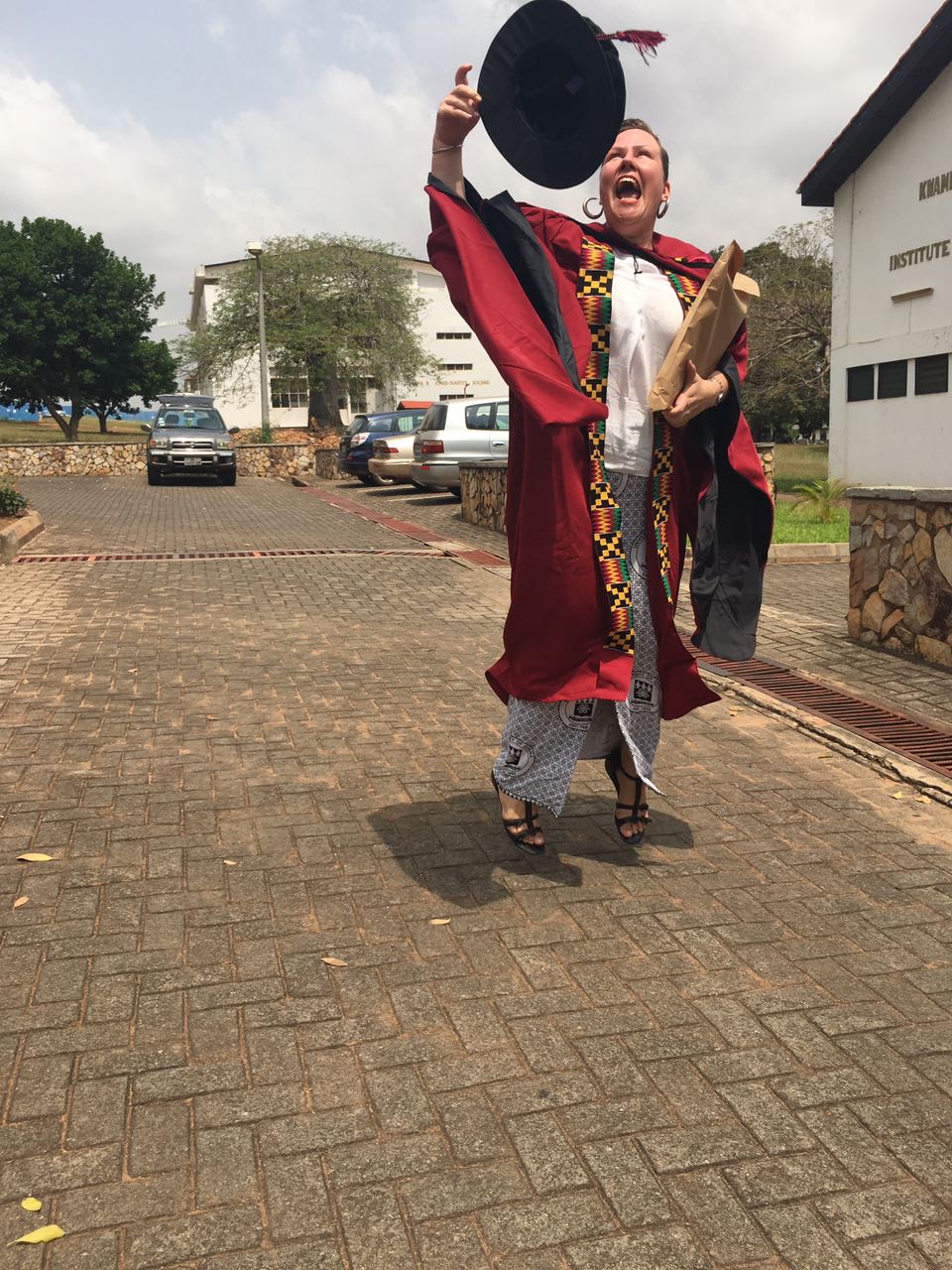
Pic: dont hide behind an avocado plant – come out and play!

Continue Reading

You may also like

>Does Gin Tonic Prevent Malaria?

> Have a couple of times come across the statement that the drink ‘Gin and Tonic’ prevents malaria since it contains quinine which is an antidote to malaria. That sounds so good. How fun is it not to cure yourself with alcohol?

But maybe it sounds too good to be true? Today, I decided to google the whole thing and came up with the following.

1. The quinine is part of the bitter tonic.
2. The drink came about as the early colonialists tried to mask the bitter quinine taste with gin.
3. To prevent malaria one needs to drink the equivalent of 67 liters of GTs per day according to the travel doctor here.

So the answer to my question is unfortunately NO, Gin and Tonics’ do not prevent malaria. Well, that is if you consume less than 67 liters a day.

Pic from cafepress.

Continue Reading

You may also like

>How to celebrate AU Day, African Union, African Unity?

> A Monday chilling at home. That’s quite nice, isn’t it?

The occation is African Union Day when we celebrate…yeah, what do we celebrate? The Pan-African vision of a united Africa? The African Union? And is it really something to celebrate? Read this sharp article By fellow blogger Ato Kwamina Dadzie on the subject.

Chilling at home, it suddenly dawns on me that every day is a holiday, somewhere on the planet. There is of course a website to inform us of them, see Earth Calendar. There I find out that today is not just AU-day, it is also the day for a local sugar festival in Bolivia, Carpet-day in Turkmenistan and National Tap-Dance-Day in the US.

So I might just celebrate a bit even though the vision of African unity is still just a dream.

In the pic an unrelated African celebration.

Continue Reading

You may also like

>Why Is Africa Begging?

> Last night, I went to the Goethe Institute in Accra to see their current exhibit open. I go to a lot of these events, being a lover of the arts, but this one was special becuase the artists were school children – well, rather youths – and hence represent the future of Ghanaian art.

There were giraffes, portraits, market scenes and animal sculptures – most notably a beautiful plaster owl made by a young man not much bigger then the owl itself.

But there was also a piece that grabbed my attention because of its clear message. Allison Elisabeth and Pele Vuncujovi had together created the African continent in papier maché – richly decorated in red, green and gold. In the middle of the continent a pair of black hands mysteriously stretch out, as if they were asking for something. As you stand back to look at the installation, you see a question mark circling the hands.

In the picture the artists by their work.

Continue Reading

You may also like

>Obama to Ghana!

> Hurray! American president Obama is due to visit Ghana on the 10-11 of July, according to Ghanaian news.

When I heard, I was a bit surprised this visit comes so soon in the presidency, Bush Jr waited to his very last 6 months, for instance. But I guess it corresponds to the different foreign policy pushed by the new president. When I discussed the upcoming visit with some Ghanaian friends it was joy and laughter all around:

Yeah, that will really be a party/It will be bigger than Clinton’s visit/I have never been to any event at Independence Square, but Chaley, for that one…

Pic borrowed from whitehouse.gov. Obama in Mexico earlier this week.

Continue Reading

You may also like

>On Ghanaian Internet Cafés

>As I returned home from dinner out (my favorite Indian!) I passed by this Internet café in Tema’s Community 8.

It is nothing special, probably actually a typical Ghanaian one. After paying 1 GHC (75 cents) for two or three hours you sit on uncomfortable chairs in front of old, thick, unportable screens displaying the internet slowly, slowly with frequent freeze-situations. And power-cuts.

Still people are determined to learn about ICT, the Internet and what is out there.

What we go through just to enter the beautiful world online.


Pics taken minutes ago in my hometown.

Continue Reading

You may also like

>Ghana’s Wonderful Fantasy Coffins

> This is how I with to leave this world. Carefully put to my last rest in hot, red chili fruit. Remembered like a fiery person.

The only country in this world where funderals are “celebrated” (more on that here) and where my wish could be executed (pun not intended) is my hot and fiery home country, Ghana. But, maybe it doesn’t have to be a chili, I can also choose a Coke Bottle, a Sardin Jar or a larger-than-life (I can’t help myself!) mobile phone.

More on Ghana’s exquisite sculpture coffins, sometime called fantasy coffins, here, here , here and here (the last from the National Museum of Funeral History, the second last from DeathOnline.net!) I can also really recommend this coffee table book on the topic.

Continue Reading

You may also like

>Tourist in Ghana

>

The canoe safari was a success. Flocks of birds flew amongst the lush vegetation lining the shore, and a group of seven hippos floated and bellowed in the river.

We should have stopped there.

The quote above is from this excellent short guide to Ghana by Marlene Smith I found in the latest issue of International Travel News. I enjoyed the truthful description of the friendly and sometimes un-cooperative Ghana.

To me, the most useful part was the description of the wildlife viewing opportunites up north, including Mole national Park (elephants, baboons and birds) and Black Volta (hippos) since I intend to go there myself later this year. However, there were also good reviews of hotels and lodges and advice on interesting cultural sites to visit.


Pic: Elephant in Mole National park borrowed from projects-abroad.dk

Continue Reading

You may also like

>Kojo Antwi and Accomodation in Ghana

> Yesterday, we meet up with our landlord for a discussion along the lines I laid out the other day in this post. The discussion gets a bit heated and we differ on if the current dollar-rate has changed the price structure in Ghana – we know for sure our wages have not climbed with the dollar!

Our landlord however defends his dollar rent (which of course is his perogative, only who can pay what he asks?) and keep referring to that we can call “Mr Antwi” who will back his claims.

I can for my life not understand why we should call the famous Ghanaian popmusician Kojo Antwi for opinions on accomodation prices, but let it pass as I dont want to irritate our landlord further.

Only this morning, when my husband had recieved a call from the real estate agent who two years ago brokered this house to us, I understand that he was the “Mr Antwi” intended. Not the popsinger.

Sometimes knowledge make us more stupid.

Pic: A cartoon of named singer borroed from his website.

Continue Reading

You may also like

>Africa Report x 2

> Today, I came across two interesting Africa Reports that I wante to share with you.

AR#1. The African Commission’s Final Report.

The African Commission , set up by the Danish government last year, is a high level group wanting to bring light to Africa’s opportunities and add new strategies to the development cooperation. I wonder if Dembisa Moyo that I wrote about last week thinks they succeeded.

Anyways, the group of really distinguished Africans and others includes Nigerias former finance minister Ngozi Okonjo-Iweala who I wrote about here and the Commission presents its recipy for development as follows: (this is the quick version, the 90-page report can be downloaded in pdf here).

1. The creation of an African Guarantee Fund in partnership with the African Development Bank aimed mobilizing loans for three billion USD and reducing the cost of access to finance for small and medium-sized enterprises, SME’s. Africa’s SME’s provide 80 percent of output and jobs in Africa;

2. Ensuring access to energy at the local level by launching a new initiative in partnership with the EU and the African Development Bank. More than three-quarters of Africans lack access to electricity – a major constraint to economic development, doing business and standards of living;

3. Improving the business climate and Africa’s competitive edge by making sure that the World Economic Forum’s Global Competitiveness Report covers all African countries. More than that, the Commission will work with a range of Africa-based entities to ensure that the findings of this benchmarking process is followed-up by the development of detailed policy responses and concrete reforms;

4. Unleashing the power of African entrepreneurship, both in start-up and existing enterprises, by providing advisory services and access to finance in order to allow young people to translate their good ideas into practical plans. The initiative will be implemented in partnership with the ILO and Youth Employment Network (a partnership between the UN, ILO and World Bank). It is expected that this initiative alone will create 40,000 new jobs and 20,000 new businesses;

5. Supporting higher education and research. Specifically, the initiative will increase the quantity and quality of artisans through apprenticeships, especially in the rural areas. Also, it will link tertiary research and business practices especially to expanding agricultural output.

I like how the Commission acknowledges the lack of electricity and how that is a basic problem in Africa (see what I wrote on it here). Also education is key, of course for development and currently the future for the African academy looks rather bleak. Just as in the north, links with research and businesses need to be improved. So, far I agree.

However, I am more sceptical towards yet another fund, the African Guarantee fund – I think many times it is information and reporting that is scarce – not a complete lack of money. And then sometimes I think the people in those high level meetings overstate the influence of their instruments. I mean, can the “World Economic Forum’s Global Competitiveness Report” really improve the business climate in Africa?

What do you think?
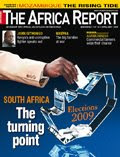
AR#2 Magazine The Africa Report.

I picked up a copy of this mag I haven’t seen before. I am a huge fan of news magazines like Focus on Africa and The Economist and today I found one that can compete.

In this mag, I liked the topics and the rich ways of describing current issues in Africa. I have studied it now for about 45 minutes, but is nowhere near done. I like that type of publication density.

The current issue of The Africa Report gave a very illuminating report of Mills’ first 100 days in power and came with an interesting economic report-booklet of Cote D’Ivoire.

I guess that makes it three Africa reports today…

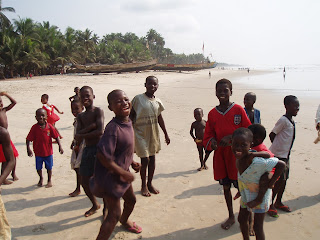
In the top pic Africa’s future on the beach in Kromantse, Central Region, Ghana.

Continue Reading

You may also like

>African Literature in the Making: Harmattan Rain

> Yesterday, I found some information on facebook about a book by a Ghanaian writer, Ayesha Harruna Attah that came out a few months ago. Her book is called Harmattan Rain, an interesting choice of title that suggests conflicts, since harmattan is the dry season which normally no not include any rains. You can read an exerpt at the Publish Your Story blog (that amongst others feature Ghanablogging‘s own Maameous among their friends) here.

I take a great interest in Ghanaian and West African literature, simply because I want to learn about life in Ghana – and what better way to learn than from books?

About the book from the author herself:

A few years before Ghana’s independence, Lizzie-Achiaa’s lover disappears. Intent on finding him, she runs away from home. Akua Afriyie, Lizzie-Achiaa’s first daughter, strikes out on her own as a single parent in a country rocked by successive coups. Her daughter Sugri grows up overprotected. She leaves home for university in New York, where she learns that sometimes one can have too much freedom. Eventually, the secrets parents keep from their children catch up with them.

What was especially fascinating about this book, if I got it crrectly, was that it was concieved at an African literature center, where a few talanted students are invited each year for a nine month (!) sejour that – if all works out – ends with a book. The center is called Per Ankh as situated in Dakar, Senegal.

There is so much talent in Africa that go unharvested. I think initiatives like Per Ankh could be one way of changing that. What do you think?

Cover pic borrowed from the author.

Continue Reading

You may also like