Book Reading in Accra with Nii Ayikwei Parkes

Last Wednesday evening, there was a book reading at a coffee house and bookshop in downtown Accra. I have been busy ever since, but still wanted to write something about it. So better late than never, here it is.

The Accra literary crowd is not spoilt with world renowned authors coming to share their work, so it was an exciting evening. Author Nii Ayikwei Parkes, fulfilled most of our expectations. “Literature is a way to have fun”, he mused. With a clear voice and a warm smile, he read his Spoken Word poetry, sang some lines from a favorite song and shared highlights – with some extra italics – from his book the Tail of  the Blue Bird (a Ghanaian crime novel that I loved, and I don’t easily warm up to this genre. Maybe this is another post, though).

The discussion that ensued touched on many different topics, but in the center was issues about editorial concerns about readers’ capacity to understand African literature (names, expressions, contexts), the localization of language and Parkes way of using italics to highlight Akan words and expressions in his book.

Parkes, book bloggers Kinna Reads and Accra books and things in blue and other guests at the Sytris book and coffee shop in Osu.

Maybe the most rewarding thing with the event, apart from meeting a wonderful writer, was that in the crowd I know we had some of the next authors out of Ghana!

See all my pics from the event here.

Continue Reading

You may also like

Migration and Development Conference in Accra

Tuesday and Wednesday, I went to a conference “Migration and Development: Opportunities and Challenges in a Globalized world”. It was a great experience in many ways – inspiration, networking and the personal growth that comes with sharing your work.

To me,  it is always inspiring to learn about research that is ongoing some favorite new aspects of migration involved gold scams in Ghana, changing migration patterns of unskilled labor to Accra (kayayeis, scrap collectors and others) and student migration out of the Congo finding new destinations.

The networking was superb – I met with many graduate students at University of Ghana – as migration naturally is interdisciplinary we never knew of each other! We have exchanged contacts and will meet up again soon. Also, in the main frame of the collage above, I met with a former lecturer to Nigeria’s president, Goodluck Jonathan!

Finally, the pressure that comes with synthesizing your work and presenting some aspect of it feels horrible, but I am convinced it is good for me. I presented a paper in progress about the migration policies of the north and their impacts on academe in the global south, naturally with a focus on Ghana.

Later this year, a publication from the conference will be put together. If my work meets the quality target (and I manage to submit in time), I will tell you  more!

See more of my photos from the conference here.


Continue Reading

You may also like

Guest Post by Kweku Ananse: How To Become an Employable PhD Graduate

Last week, Kwaku Ananse wrote a guest post about problematic supervisors. A main problem,he concluded is  misguided advice suggesting you focus only on your dissertation:

In our times, employers want graduates with experience, widely interpreted either as teaching, research experience as evident in a publication, or both.

This reality brings me to the issue of taking initiative outside the normal routines of the graduate program.

1.One is to visit the personal websites of other graduate students in other universities who are in the same discipline as you are.Know what these students are doing in terms of the conferences they attend, the types of publications they have (and the journals they have published in etc). Being on top of these things should alert you to what your competitors are up to.

2. Another thing outside the graduate comfort zone is to test your ideas by sending cold emails to perhaps established leading scholars in the field to give you feedback regarding your use of their analytical ideas (Here, I have to say I am hesitant with important but emerging scholars). You are not always guaranteed a response but you might be surprised how some of these scholars are interested to help young intellectuals with feedback and suggestions of recent literature. These people can be your pool of what Kajsa refers to as “informal supervisors” (see her post ‘Informal Supervisors: Surviving Ph.D‘) who can be both local (in other departments in your school as well as in your program) and as well as international.

3. One important thing to note in a graduate school is not to see yourself as incapable of publishing in leading journals in your field.

  • Read such journals and note what the leading debates are.
  • Examine such debates side by side your current research.
  • When you see a contribution that perhaps a facet of your research can make to such debates, ‘be bold’ (as they say in GH-politics) and write an article and send it out.

Several things can happen with such an approach: the paper might be rejected (and good reviewers will give you details as why the paper was rejected); paper accepted (but with some revision,either substantial or minor). Whatever the case, the plus side of taking such an initiative is that you have begun a process that is going to be part of your academic life.

This guest post is written by fellow graduate student Kwaku Ananse, one of my readers.


Continue Reading

You may also like

Guest Post by Kweku Ananse: Why Your PhD Supervisor is Not Reading Your Work

I am happy to introduce my first guest writer on this blog. This guest post is written by fellow graduate student Kwaku Ananse, one of my readers:

Just like most things in life, conventional wisdom posits that graduate school life is a linear process: you apply to the program of choice, you get accepted, you take and complete core and pertinent elective class classes, pass all those classes mostly with As (and Bs), and then you focus on completing your proposed thesis or dissertation. Even within the process of completing the thesis/dissertation, the accepted thinking posits that those committee members you select are the ones that eventually lead you to the finish line.

However, within my experience, being a ‘traditional graduate student’ who wants take the routine routes to complete a program should reassess such taken-for-taken ideas. One should realize that your supervisor most likely will not be the ‘ideal’ supervisor to deliver on the assumed responsibilities that he/she is supposed to provide.

There are many problems relating to why responsibilities are not fulfilled:

  1. Lack of time to read your work (but makes you to believe that all is well);
  2. Unwillingness/inability to provide you regular important feedback;
  3. Too many other ‘senior’ graduate students he/she might be attending to etc;
  4. The person reads,but doesn’t challenge you in your thinking/writing etc.
  5. Also committee members, understandably, will not like to step on a colleague’s toes (your supervisor’s) by seeming to provide research guidance that contradicts one’s supervisor’s (perhaps outmoded) suggestions.

Another reason to always be wary of the traditional route comes in the guise of ‘just complete your course work and dissertation advice’. Such advice doesn’t take cognizance of recent trends. Nowadays, having a transcript, a diploma/certificate and a dissertation under your armpit doesn’t cut it (unless of course, you already have a job security in a university/college).

In our times, employers want graduates with experience, widely interpreted either as teaching, research experience as evident in a publication, or both.

So, what should we do? Look out for Kwaku  Ananse’s next blogpost.


Continue Reading

You may also like

Plane Crash in Accra: News Broke on Social Media

The #AlliedAir cargo flight thats down @ Elwak sports stadium... on Twitpic

This evening a plane crashed through  one of the walls of Kotoka International Airport in Accra. As the airport is very centrally located, this is a catastrophe. At the time, a  heavy rainfall was coming down, potentially causing the accident, but surely limiting the casualties as the area is a traffic hub for eastern/central Accra.

The news broke on social media sites like Facebook and Twitter.

[blackbirdpie url=”http://twitter.com/SamuelObour/status/209023833632555008″]

[blackbirdpie url=”http://twitter.com/MacJordaN/status/209025454991089664″]

And there were conversations on how traditional media was running behind. Just 10 m inutes ago TV 3 featured the news, according toTV3 the cargo plane was coming form Nigeria and skidded off the runway.

However, there was plenty confusion.

[blackbirdpie url=”http://twitter.com/freduagyeman/status/209029990057115648″]

There were some casualties, people on a “trotro” or minibus and a motorcyclist are mentioned in unconfired reports and the deathtollhas been mentioned from8-25 people. The road  from 37  station towards La Badi  beach is closed.

Online news is still scarce. See MyJoyOnline, Nigerian Daily Times, fellow Ghanaian blogger Samuel Obour.

UPDATE: Reuters report and Allied Press.

On Twitter, the discussion continues.

Continue Reading

You may also like

Computer Meltdown

Over the last month, my darling computer has slowly gone to an eternal rest. At first, the battery was lasting for shorter and shorter periods. Then it was suddenly shutting down. Repeatedly. Then in addition it did not allow me to watch video.  At some point, my lap-top was more like a unreliable desk-top. And now since a few days it does not start at all. I am missing everything about it and trying to adjust to a work computer with a different operating system for now.

A blog related challenge is that I always attach pictures to my blog posts and most of my pics are now locked up in a hard drive I cannot access (no worries, I have back up). For now, that means posts without pictures (and with a slightly sad undertone).

My darling computer, you are missed!

Continue Reading

You may also like

Let’s Talk About Money: Ghana Inflation and Exchange Rates

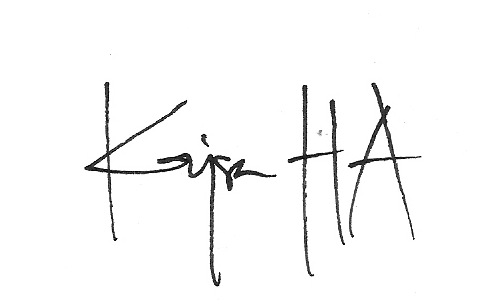
In Ghana, election year comes with many activities. Except for the political events, speeches and rallys, the economy sees many hikes and lows. What is happening is that projects in the pipeline suddenly need to be executed as a 4 year period comes to an end. On one hand, this is great news, new roads are finally completed, there is work for everyone and business is flourishing. The downside of this increase in expenditure is heightened inflation and a weakened cedi exchange rate.

In April, Ghana’s inflation was at a year high at 9,1 percent (up from 8,8 percent the month before), reports AF Reuters. This morning on BBC, a report describing Argentina’s financial situation seemed to echo what is happening in Ghana. Hotel rooms, school fees, real estate is all quoted in US dollars as the value of the local currecy shifts so often (downwards) that it is no point setting prices in it.  The exchange rate influences the inflation rate. Bank of Ghana in their Inflation Outlook Report (April 2012) states:

The cedi weakened against the US dollar as a result of high demand for foreign exchange. In the first quarter of

2012, the cedi depreciated by 8.3 per cent against the US dollar, compared to 2 per cent depreciation in the
same period of 2011.
The weakening of the local currency started in the last quarter of 2011 and was driven by several factors
including the growing demand for foreign exchange to support increased economic activity due to the expansion
of the economy. A second, more structural factor is the changing nature of the trade pattern which is gradually

shifting towards Asia, especially China, for which transactions are mostly conducted on cash basis. The

persistent depreciation of the cedi can have far reaching consequences on the inflation profile. A third factor
relates to external sector conditions, such as the euro zone crisis which have also instigated investor portfolio
outflows from the bond market in the latter part of 2011. There are also the speculative activities by foreign
exchange traders trying to profit from the depreciation of the currency while other market participants seek to
hedge against further depreciation thereby exacerbating the situation.

In January, the exchange rate was 1.65 GHC to 1 USD. In April, I bought flight tickets for my family’s yearly trip to Sweden to the exchange rate of 1,78 GHC to 1 USD. Yesterday, the exchange rate announced on the evening news was 1,93! As imports are dominating the Ghanaian market, that is we do not produce many goods locally, this affects not just foreign travel, but almost every purchase in your daily life.

The effect on Ghanaians’ lives is immediately felt, as each week your salary can buy you less. Some goods such as cement is because of increased demand rising even quicker in price. A bag of cement that was 16 GHC in February is now 20-23 GHC! Just like in Argentina, there has been recent debate on if official numbers really capture the inflation “on the ground”. Dr Bawumia from the opposition has raised issues, the Ghana Statistical Survey has responded.  Regardless, this is a problem that Ghanaians carry into the upcoming election 2012. 

Read more in AF Reuter’s report, on Bank of Ghana’s website and Ghana Statistical Service. Photo from Flickr.
Continue Reading

You may also like

Blogs I Read: Nana Kofi Acquah – Africaphotographer

In this series, I am recommending my favorite blogs. This week, I’d like to share with you Nana Kofi Acquah and his blog: Africaphotographer. 

My friend and BloggingGhana member Nana Kofi calls himself a “storytelling photographer”, a description that is spot on. Maybe with the addition of “one of the best photographers in West Africa”.  Nana Kofi is not your ordinary camera guy as he was an English major in university, worked as a writer and only later took up photography. This makes for an individual who’s aim is to tell a story, choice of medium is secondary. Many times this interestingly leads to extraordinarily beautiful frames, often with movement in them, full of humor, highlights that grab your attention, or in the studio shoots a quiet – almost meditation like – stillness much more than a “frozen moment”.

Personally, I appreciate that he is not the kind of photographer that lets his photos alone tell the story. Nana Kofi Acquah does not hesitate to complement his photos with words, expressive titles or even long essays! Many times these words add a distinct political dimension that assures the viewer of that a photo is not decoration. A photo is a story.

An example of such a photo essay is Nana Kofi Acquah’s recent post Africa Will Rise. Africa is Rising.


Continue Reading

You may also like

BloggingGhana Celebrates Press Freedom Day

Recently, BloggingGhana was invited to the Press Freedom Day event organized by the Ghana Journalists’ Association (GJA).

Our executive Nii Ayertey Aryeh, represented us at the event and here is the video evidence.

“We as bloggers recognize the importance of guarding the press freedom we enjoy today… We have a keen interest in putting Ghanaian stories online”

Continue Reading

You may also like