
The Ashaiman Spring, BBC Africa Debate and African New Middle Class

Ashaiman collage

On Monday, drivers in the town of Ashaiman started a protest against the horrible state of the roads in the community. Daily Graphic reports that as early as 5 am, protesters had blocked the roads and by 6 am they had reahed the Tema motorway, taking over toll booths and blocking traffic to and fro Accra.

What is Ashaiman? It is a residential town where many workers of Tema (the industrial city) and Accra (the capital of Ghana) live. Although rent is cheaper here than in the neighbouring cities, many of Ashaiman’s inhabitants have to endure long hours of commuting. Although its population is twice that of Tema, it was only 5 years ago it got its own municipal district and local assembly.

Every day on my way home to Tema, I have to cross the traffic queues leading to Ashaiaman that is situated on the other side of the Tema motorway from where I live. Only crossing Ashaiman traffic many times takes upwards 20-30 minutes. As I later breeze in the opposite direction, I see people walking towards Ashaiman moving faster than the traffic all the way to the central part of Tema.

The MP of the area, Alfred Agbesi and the Municipal Chief Executive, Numo Adinortey Addison were accused by the demonstrators of not doing their jobs – providing better roads! – but could, according to the same newspaper, “not be reached for their comments”. However, the newspaper also reported “policemen and soldiers managed to bring the situation under control after 4 hours of violent protest…[and] would offer 24-hour patrol to residents and commuters”.

***

Today, I took part in the internationally broadcast BBC Africa Debate together with a delegation from Ashesi University College. The background of the debate “Can the middle class drive growth?” was both Obama’s travel to the continent, supposedly to augment trade, and the African Development Bank’s report on the New African Middle Class (PDF). Interestingly, the AfDB’s definition is people who spend 2-20 USD/day per capita. That means, just after the poverty level (less than 2 USD/day) comes now “middle-income”. This was debated along with what government needs to do and what we as individuals can do.

During the debate, the recent Ashaiman demonstration, called “the Ashaiman Spring” by some, was not mentioned, but maybe it should have been? Here we have people who have jobs, pay taxes, dutifully go to work everyday even when it means hours in traffic morning and evening – but not benefitting much.

All public amenities in Ghana need back-ups: water (buckets and poly tanks), education (private school if you can afford), health (herbal traditional medicine or private health insurance), electricity (candles, batteries and generators), waste collection (burning in your backyard), but poor roads are difficult to create your own private alternative for…

The representative from the AfDB concluded the debate by graciously admitting their definition of middle-class only talks about spending, but does not include living costs. We are many who know by experience that living a middle-class life in Ghana demands much more than a middle-class income and plenty of patience…

Listen to Ghana Connect on JOY FM Friday 28 June at 6.30- 7.00 PM for more on the “Ashaiman Spring” and BBC, 7 PM GMT for the full debate!

 

Continue Reading

You may also like

My 10 Favorite Ghanaian Brands (Part 1/2)

In no particular order  here is  the first part of my list of 10 favorite Ghanaian brands in 2013!

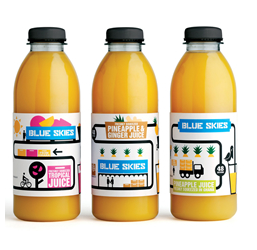
1. Blue Skies

Ghana’s best juice in my opinion.

Favorite product: Pineapple and Ginger, but their blog talks about MOB which sounds fab!

From blueskies.com


2. Kiki Clothing

My favorite dress-maker.

Favorite product: The Kimono Dress

Screen Shot 2013-06-19 at 10.55.11 PM

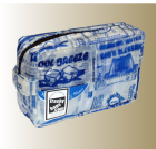
3. Trashy Bags

Ghana’s most innovative business idea to add value to trash!

Favorite product: Toiletry bags (called cosmetic bags in the web shop)  from sachet water bags.

trashy bags

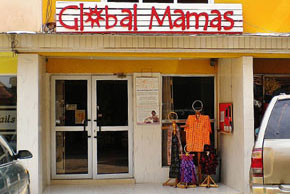
4. Global Mamas

Feel good fair trade shopping for gifts for everybody (including myself).

Favorite product: The Eli Dress (wearing one just now)

ShopGlobalMamas-Display-1


5. All Pure Nature

Lifting up the amazing products that are Ghanaian traditional skin care.

Favorite product: Women’s Gold Shea Oil (!)

Screen Shot 2013-06-19 at 11.18.23 PM

Watch this space for the next five Ghanaian brands I adore!


Continue Reading

You may also like

Learning from Your Mistakes: Ashesi and Thinking Like a Genius!

I was happy to see this message on Ashesi’s website. A brief article outlining what happened in the beginning of June, when Ashesi servers went offline and we became very difficult to reach. What happened? What did we do? What have we learned?

Today, I am launching my short summer course at Ashesi, just three afternoons for a small group of freshmen (or are you now sophomores?) The course is humbly called Think Like a Genius! and is modelled on Michael J. Gelb’s book “How to think like Leonardo da Vinci: Seven Steps to Genius Every Day”. Interestingly the second of those seven steps is the willingness to learn from mistakes… What is that? You want to know the other steps? Alright. Here is an overview:

CURIOSITA:

Approaching life with insatiable curiosity and an unrelenting quest for continuous learning

DIMOSTRAZIONE:

Committing to test knowledge through experience, persistence and a willingness to learn from mistakes

SENSAZIONE:

Continually refining the senses, especially sight, as the means to enliven experience

SFUMATO

Embracing ambiguity, paradox, and uncertaint

ARTE/SCIENZA

Balancing science and art, logic and imagination – ‘whole-brain thinking’

CORPORALITA

Cultivating grace, ambidexterity, fitness and poise

CONNESSIONE

Recognizing and appreciating the interconnectedness of all things – ‘systems thinking’


For the full shebang on how to Think Like a Genius!, read the book or attend the course!


Continue Reading

You may also like

Utility Tariffs to Go Up: Ghana Connect Debate on Joy FM

In the news the last couple of days, we could read that the Public Utility Regulatory Commission (PURC) is having talks with government, initiated by the Volta River Authority (VRA) the biggest power producer in Ghana, on increasing tariffs for electricity and water. See  this Joy FM report for instance.

I have been invited to share my views on JoyFMs new program Ghana Connect – a program that allows regular Ghanaians – and myself – to voice our opinions together with stakeholders. Tonight VRA has been invited.

The producer/host sent me this blurb:

“Utility tariffs are set to go up. The only question now remains when and not if.  You must be prepared to pay as much as 166 per cent more for electricity and water than you are paying now. The expert consultations have already started but on Ghana Connect this Friday, we connect the Ghanaian consumer in Ghana and beyond to interrogate the proposed tariff increases. Are you ready to pay more and how much is enough?”

My argument in brief is:
  1. At some point we need to pay what utilities actually cost in order for the service to be sustainable.
  2. Utility subsidies favor middle and upper class people more than the poor as generators and poly tanks use more than dumso-dumso and buckets.
  3. Electricity production is complicated, but there is NO REASON why Ghana should not be able to provide potable water for its population.
  4. Increasing prices by more than 100% is not advisable as ripple effects are huge and people need to plan expenses. What is the plan for the next five years?
  5. On the other hand, private solutions (batteries/generators and pure/bottled water cost much much more) and from a Swedish perspective we have a lot to win from solving these issues together rather than apart.

As I sent out an email to BloggingGhana about this radio program, many of our members provided their two pesewas – so this issue is HOT!  Someone called the increase “draconian” another person said “I would prefer to pay, than to pretend to be paying bills as they also pretend to be giving me a service.”

Tune in at 6.30 PM if you want to hear me voice my views.

Continue Reading

You may also like

My Visit at iSpace – A New Home for the Tech Community in Ghana

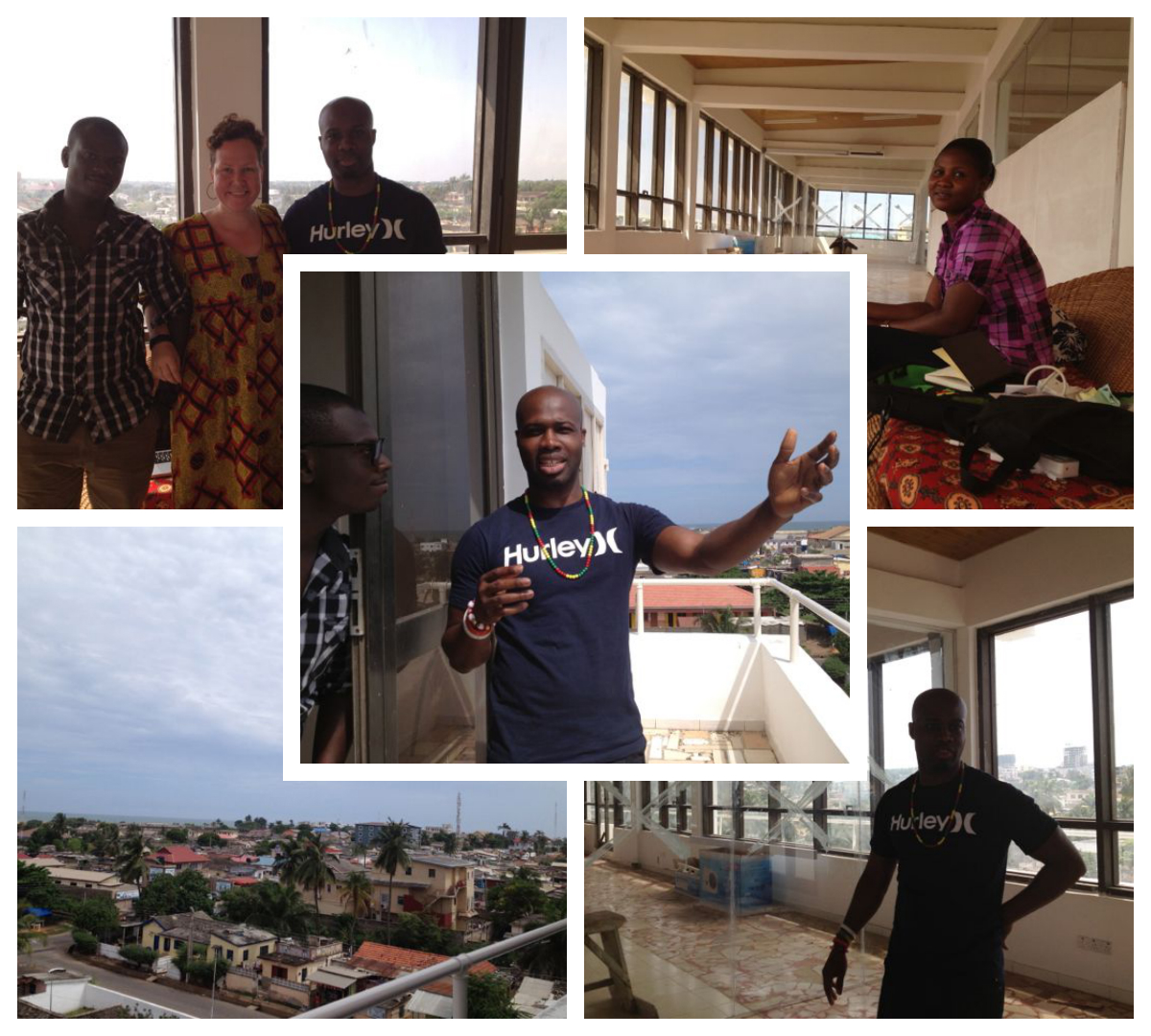
The other day, I had the pleasure of meeting Fiifi Baidoo and Josiah Eyison of iSpace Ghana. iSpace is an idea of bringing together the tech community, social entrepreneurs and related folks, like bloggers in Ghana. iSpace is also an amazing space on the fifth floor of a building between the buzzing Oxford street in Osu and the La Beach, it offers lovely views and –  by the end of this month –  office, meeting and lounging spaces for the community. 

iSpace collage

Clockwise from “noon”: a view of the full space with assistant Dorcas at the front, Josiah at the conference room glass wall,  view(!), me flanked by the iSpace guys and in the middle Josiah describing the plan and Fiifi listening.

I walked away from our first meeting impressed by the vision (“in two years we have out-grown this space”) and the social concern (“we are doing this so that we can come together and solve Ghanaian issues”) and I can definitely see how BloggingGhana members can use this hub.

Eric Hersman, or White African as we know him, says about tech hubs in Africa:

“The tech hubs in Africa provide a home for those with new and innovative ideas, create an atmosphere where they are encouraged to try new things, and most importantly are able to meet like-minded individuals they can grow with.”

To sum up, iSpace is wonderful news for a community that is growing stronger by the day, but until now lacks a space to come together! 

Read also Edward Tagoe’s informative post on iSpace,  iSpace’s website  or Google+ page. Other African tech hubs are listed with AfricaHubs.

Continue Reading

You may also like

Hipsters in Ghana: Part 1

So, a Swedish friend of mine wrote an article about how politicians can learn from hipsters. For those of you who do not read Swedish, his argument was basically that even though hipsters might look silly and obsess over city farms, homemade bread and vintage clothing – they offer insights into sustainable living of the future. As I complimented hom on the interesting frame (learning from hipsters), he responded with a question: How is it with hipsters in Ghana?

Well, let’s back track and fist find a definition for hipsters. Urban Dictionary thinks it is:

 a subculture of men and women typically in their 20’s and 30’s that value independent thinking, counter-culture, progressive politics, an appreciation of art and indie-rock, creativity, intelligence, and witty banter.

So, are there hipsters in Ghana?

Hipster collage

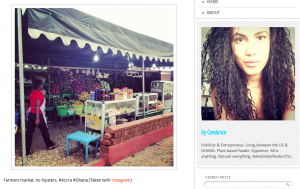
I guess that depends on who you ask. Candance (who recently moved to Ghana from the US) for instance recently commented that on Instagram that she was at a Ghanaian farmers’ market with NO HIPSTERS!

Screen Shot 2013-06-03 at 12.54.59 PM

But that might just have been due to language. That market likely wasn’t called a “farmers’ market”. And how will then hipsters know it’s a place for them?

But when used clothes are called “Vintage”  as well as when social media is discussed, hipsters do show up, also in Ghana. The indie scene in Ghana, in my humble opinion, is flourishing with TEDx events (read about TEDxOsu here from just this past weekend), AccraDotAlt’s TalkPartis (and check out these great hipster photos!) and Jungle Music Festival Asabaako where the Ghanaian hipster community discuss art, listen to local DJs play indie music and eat local foods. However, the best place to spot hipsters in Accra is at The Republic Bar, where local spirits blended into great cocktails meet nostalgic decor. Does it get more hipsterish?

Yes, the hipster scene in Ghana might be small, foreign inspired and sometimes elitist, but I think  – just like my Swedish friend – we can learn a thing or two from hipsters and their obsessions (for instance The Republic Bar manages to have the best AND cheapest cocktails in town as they use local ingredients).

What did I forget about the hipster scene in Ghana? I will gather your comments and write a follow up post as soon as my homemade bread has risen. 

Photo collage trying to prove my point with photos from Facebook groups for Vintage Gh and BloggingGhana.


Continue Reading

You may also like